Products You May Like
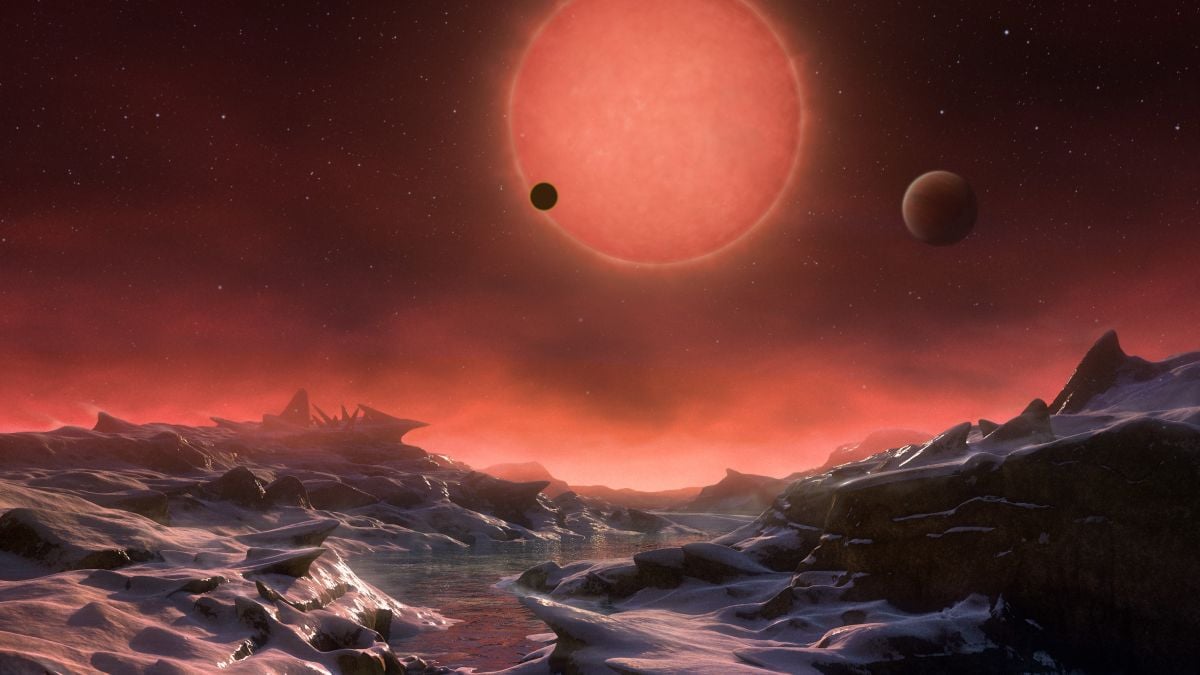
One of the best places to search for life outside the Solar System may be practically right next door.
A planet initially identified in 2024 orbiting a red dwarf star named GJ 3378 may be even more Earth-like than initial observations suggested.
This world, named GJ 3378b, is what we call a super-Earth: larger than Earth, but small enough for a rocky composition similar to the only planet in the Universe known to host life – ours.
A large suite of follow-up observations has shown that GJ 3378b still sits at just the right distance from its star for liquid water on its surface – the first item on the habitability checklist – and also refined its mass estimate from 5.3 down to just 2.3 Earth masses.
That means it’s far more likely to be rocky and, at a mere hop-skip-and-jump of 25 light-years away, an even more enticing candidate for further habitability-focused investigation than initially thought.
In fact, it’s “among the most potentially Earth-like exoplanets known within the 10-parsec solar neighborhood,” according to a team led by astronomer Paul Robertson of the University of California, Irvine in a paper published in The Astrophysical Journal.
 frameborder=”0″ allow=”accelerometer; autoplay; clipboard-write; encrypted-media; gyroscope; picture-in-picture; web-share” referrerpolicy=”strict-origin-when-cross-origin” allowfullscreen>
“This one’s exciting,” Robertson says in a statement. “It’s one of our closest cosmic neighbors. Twenty-five light-years sounds like a long way, but the Milky Way is about 100,000 light-years across, so in that respect it’s our next-door neighbor.”
One of the biggest questions in the Universe is whether Earth is alone in its ability to host life.
Scientists are still trying to figure out the characteristics that could allow a planet to be habitable, from the type of star it orbits to the architecture of the planetary system it inhabits, down to whether or not it has tectonic plates or an atmosphere.
Some of these traits will be harder to look for than others, but the very first thing scientists tend to select for is an orbital range we call the habitable zone.
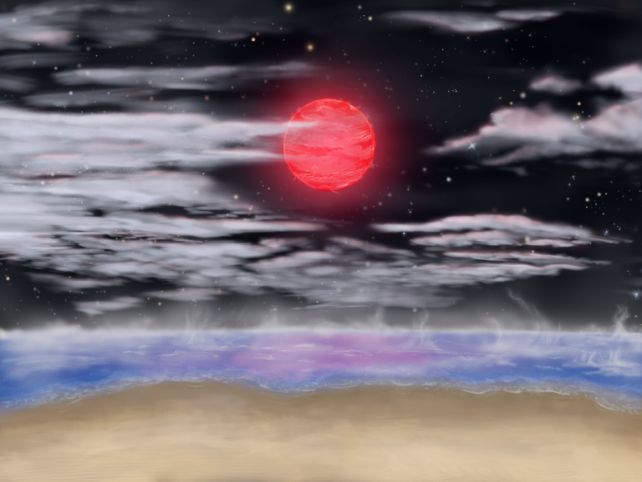
This is the distance between the exoplanet and its host star, crucial for ascertaining whether said exoplanet can have liquid surface water. Too close and it evaporates; too far and it freezes.
“Our mantra is ‘follow the water,'” Robertson says. “It’s the one thing every known living thing on Earth needs, so that’s the first thing we look for when trying to find environments that could sustain life.”
The next question is often composition. We know rocky planets can host life, because we’re living it. Other kinds of worlds might too, but we don’t know that yet; so, if narrowing down candidates, rocky worlds are in, while the rest go on the ‘maybe’ pile.
GJ 3378b caught the attention of planetary scientists when initial analysis suggested an orbital period of 24.73 days, which placed it squarely in its star’s habitable zone.
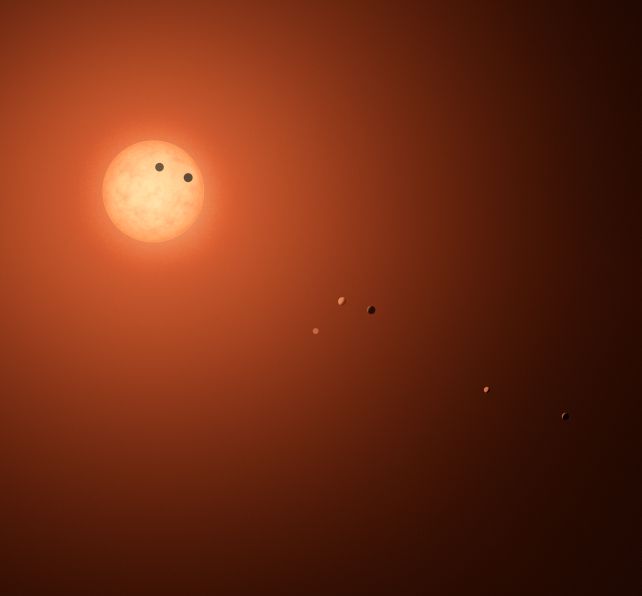
Although this period is significantly shorter than Earth’s year, red dwarfs are much cooler and dimmer than the Sun, so the habitable zone sits much, much closer to the star.
However, a question mark still hung over the exoplanet’s mass.
About 5 Earth masses is the fuzzy boundary between two kinds of planet. Below that mass, worlds are more likely to be rocky super-Earths. Above it, exoplanets are more likely to be mini-Neptunes – gas worlds with thick, hazy atmospheres.
GJ 3378b’s initial mass estimate of 5.3 Earth masses was borderline, and one of the questions Robertson and his team hoped to clear up.
They collected observations of the star using a range of Earth- and space-based instruments, looking for the very faint changes in the star’s light as it minutely wobbles under the exoplanet’s gravitational influence.
“The name of the game is precision,” says astronomer Michael Endl of the University of Texas at Austin. “In order to find those low-mass planets, you’re always looking for tiny signals. If your instruments aren’t precise enough, you won’t find them. You can’t find them.”
Those precision measurements allowed the researchers to refine the mass and orbit of GJ 3378b.
Its orbit turned out to be a little closer to the star than the original analysis suggested, coming in at 21.45 days. That’s still solidly inside the habitable zone.
“This super-Earth gets about 90 percent of the radiation from its host star as Earth gets from its sun, so it’s right in the sweet spot,” Robertson says.
And the refined mass of 2.3 Earth masses places it right in the super-Earth sweet spot, too.

That doesn’t mean GJ 3378b is habitable. Any liquid water exposed to the vacuum of space will sublime; for a planet to have liquid surface water, it needs an atmosphere. We currently have no way of knowing if GJ 3378b has an atmosphere.
These tiny stars are far more active than the Sun, unleashing frequent flares and coronal mass ejections that may strip the atmospheres from nearby worlds.
Related: The Red Sky Paradox Will Make You Question Our Very Place in The Universe
But for now, the research bumps GJ 3378b near the top of the list of worlds to investigate for habitability.
“The ultimate goal is biosignatures. We really want to know, ‘Are we alone in the universe?'” says Endl.
“We are still in the reconnaissance phase of our solar neighborhood, trying to find the planets around the nearest stars because those will be the easiest ones to detect a biosignature on. This planet brings us one step closer to knowing all of our neighbors and, ultimately, which might be hospitable for life.”
The research has been published in The Astrophysical Journal.
This article was fact-checked by Jess Cockerill and edited by Fiona MacDonald. While we pride ourselves on our process, we are only human. If you spot a mistake, please let us know.