Products You May Like
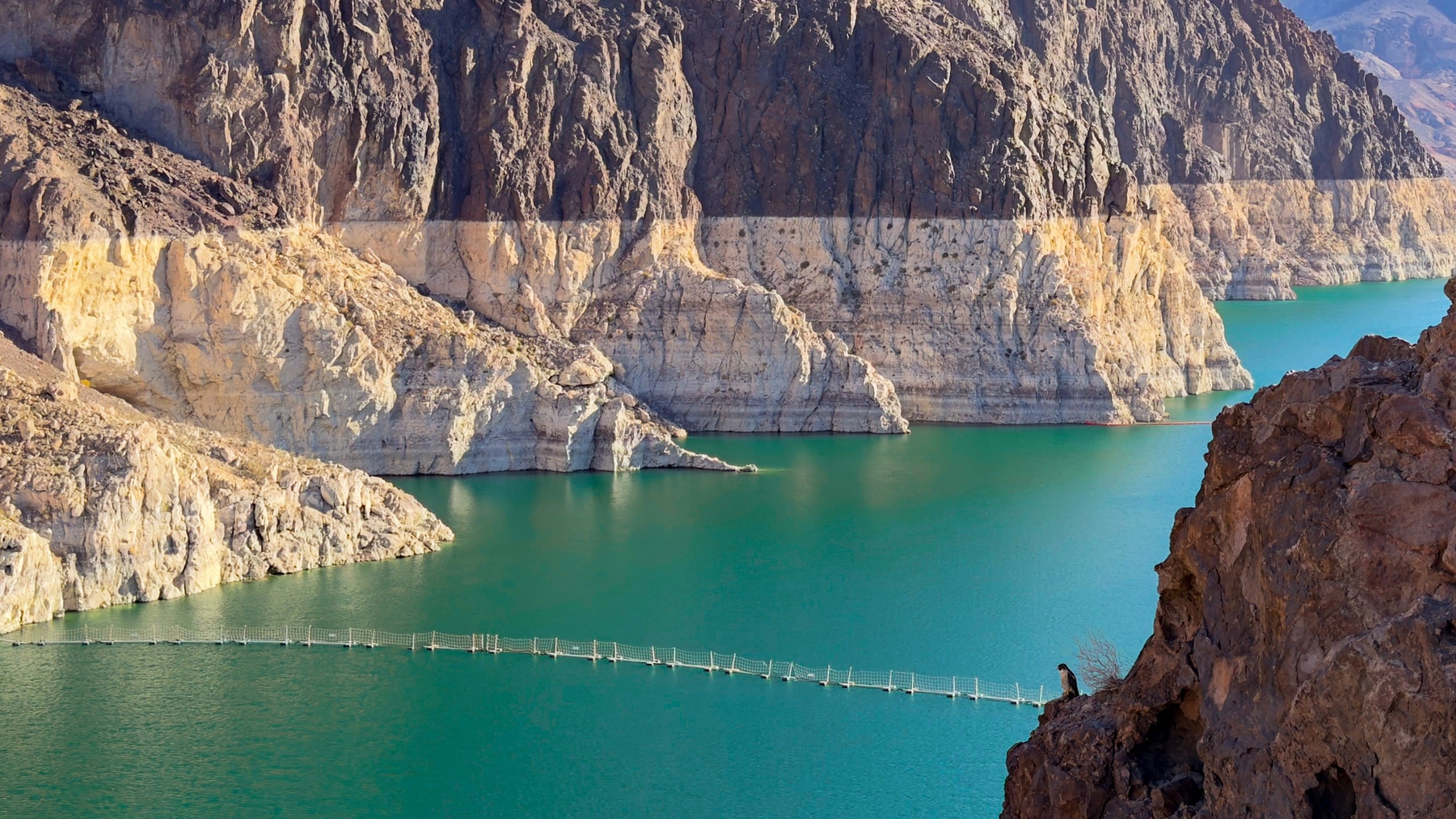
The Southwestern US is in an ongoing megadrought that began in 2000, largely driven by overconsumption of water and climate change.
Water scarcity in the region is immediately visible in the Colorado River and the reservoirs of Lake Mead and Lake Powell.
As the region’s agricultural industries and human populations grow, water levels continue to fall. Currently, surface reservoirs contain just 15 months’ worth of water, based on average current consumption rates.
Farmlands use up the majority of the Basin’s water supply: about 52 percent of water from the Colorado River goes to agricultural irrigation.
When those rivers, lakes and reservoirs dry up, those industries – and the ~40 million people who live in the Colorado River Basin – rely on another, hidden source of water below ground.
But researchers from Virginia Tech and Indiana University Bloomington show those groundwater supplies are also rapidly declining, in ways they didn’t expect.
Their results are presented in a new paper published in Water Resources Research.
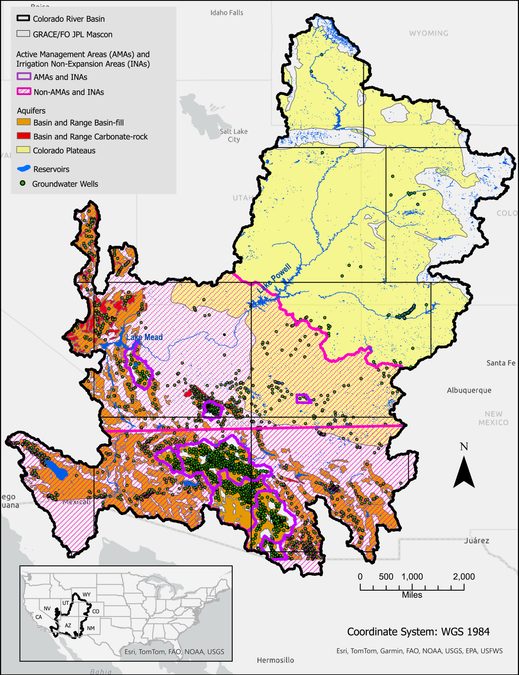
Vast quantities of water are stored in aquifers underground, in both the Upper and Lower regions of the Colorado River Basin.
The Upper Basin’s groundwater has historically been considered more resilient, because it usually receives a top-up from snowmelt thanks to the Rockies and other mountains in the area.
But since at least the start of the 20th century, the amount of water landing on those mountains in the form of snow has been on a steady decline.
The snowpack across Utah and Colorado in March of 2026 was below 2001-2025 averages, and peaked about four weeks earlier than usual.
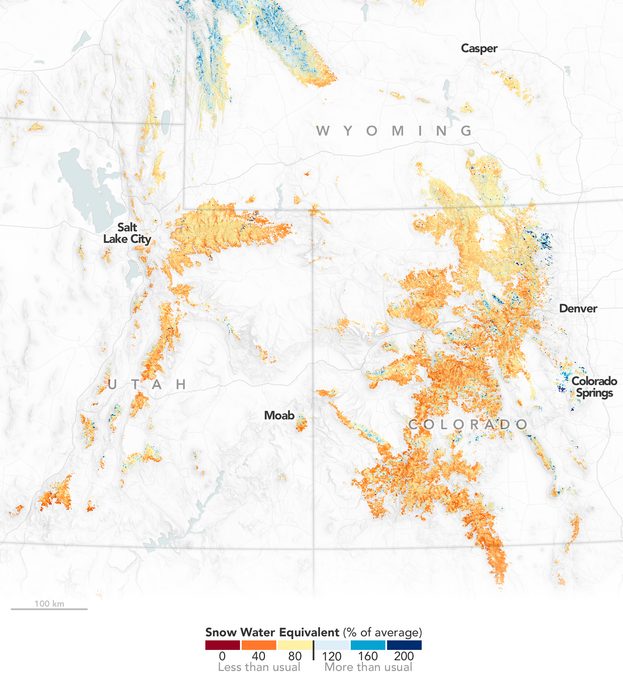
Scientists at the USGS have already linked the ongoing decline of snowfall to the Colorado River’s ever-worsening stagnancy.
But the new analysis of data from 2004 to 2023 reveals that those once-reliable Upper Basin groundwater supplies are drying up even faster than those in the lower Basin.
During a recent period of severe drought, from October 2019 to the end of September 2022, the Upper Basin lost roughly 4.6 trillion gallons of groundwater.
The Lower Basin, once considered the more vulnerable of the two, lost around 2.5 trillion gallons in that period.
“We generally think of the Upper Basin as more resilient because of its snowmelt-driven recharge,” says Esther Oyedele, a geoscientist at Virginia Tech and lead author of the paper.
“I did not expect to see so much groundwater loss there during the recent drought.”
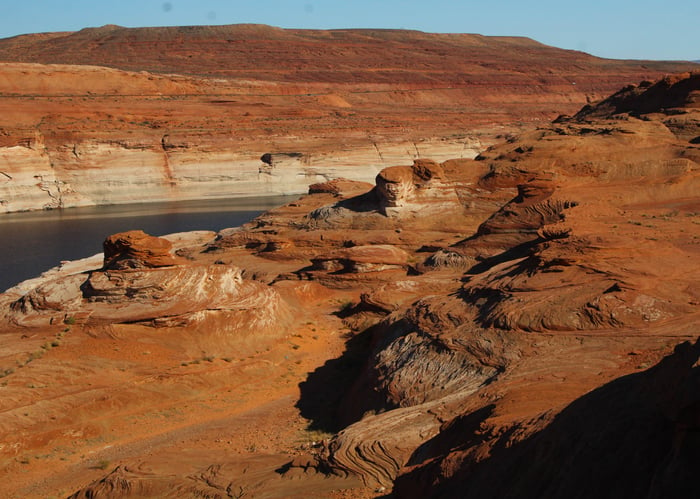
It’s unlikely the basins have been replenished, since snow has been so scarce in the years since.
“What surprised me even more was that groundwater did not track surface-water shortages in the same way in the Upper and Lower Basins,” Oyedele says.
In the Upper Basin, their analysis showed surface water deficits were strongly coupled with the probability of groundwater drought.
But in the Lower Basin, there was less of a link.
This might be because surface water availability in the Lower Basin is already chronically limited, so groundwater extraction there is less dependent on how much water is flowing above ground.
“Continued groundwater depletion, especially in the Upper Basin, could further reduce groundwater contributions to rivers and intensify the feedback between groundwater loss and surface-water shortages,” says hydrologist Susanna Werth, an expert in remote sensing at Virginia Tech.
“Looking at surface water alone is no longer enough. Protecting the Colorado River Basin requires managing the water above and below ground.”
The research has been published in Water Resources Research.
This article was fact-checked by Fiona MacDonald and edited by Fiona MacDonald. While we pride ourselves on our process, we are only human. If you spot a mistake, please let us know.