Products You May Like
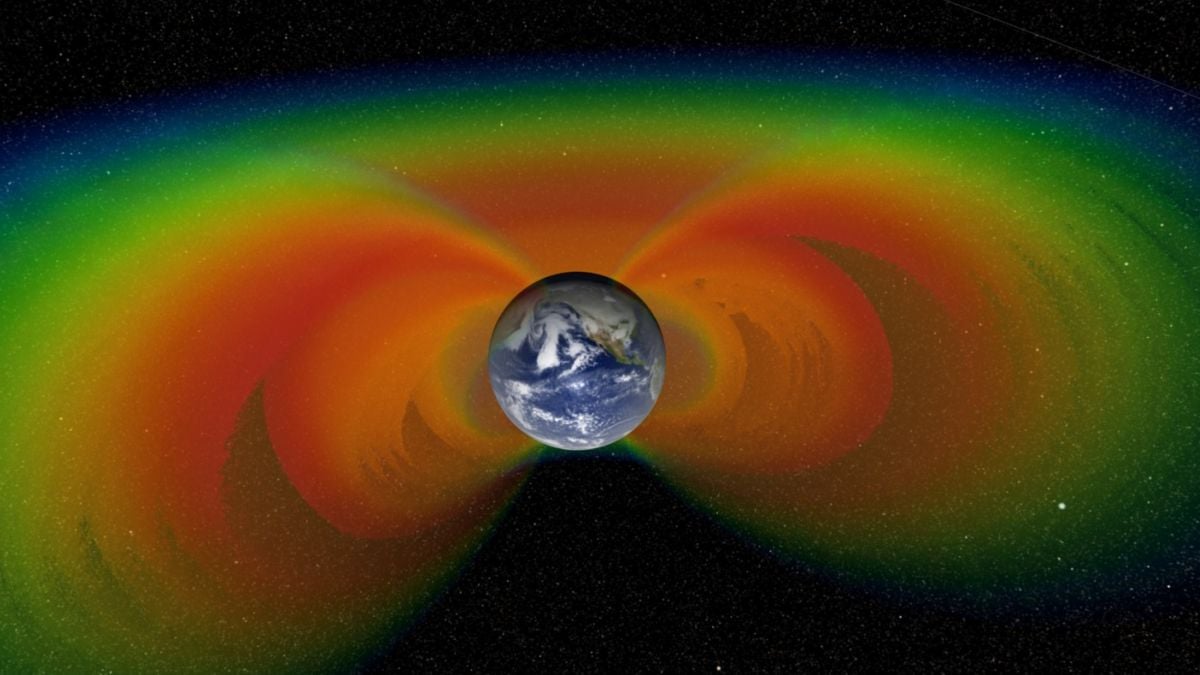
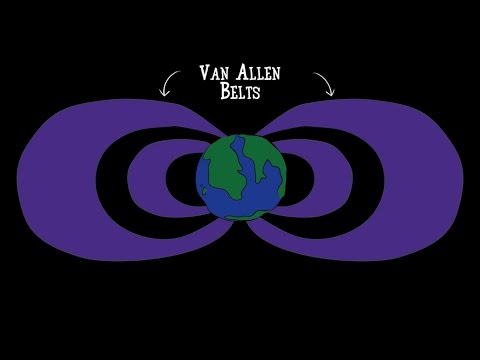
Wrapped around our world like a giant invisible donut is one of Earth’s strangest features.
The Van Allen radiation belts are swarms of high-energy charged particles trapped in the web of Earth’s magnetic field, many accelerated to near-light speeds.
Normally, the high-speed particles are considered a space hazard that satellite engineers and human exploration missions need to plan for.
But nuclear physicist Areg Danagoulian of MIT thinks they could become an unlikely ally, helping detect nuclear weapons hidden in Earth orbit.
“I started studying the literature on the radiation environment in outer space and found out about the large populations of trapped protons, as reported in many previous studies,” Danagoulian told ScienceAlert.
“This is where it clicked: protons and spallation on uranium.”
Danagoulian describes the concept in a paper published in Nature.
 frameborder=”0″ allow=”accelerometer; autoplay; clipboard-write; encrypted-media; gyroscope; picture-in-picture; web-share” referrerpolicy=”strict-origin-when-cross-origin” allowfullscreen>
The mid-century boom of nuclear testing was a strange time – deeply destructive in many ways, but also deeply informative.
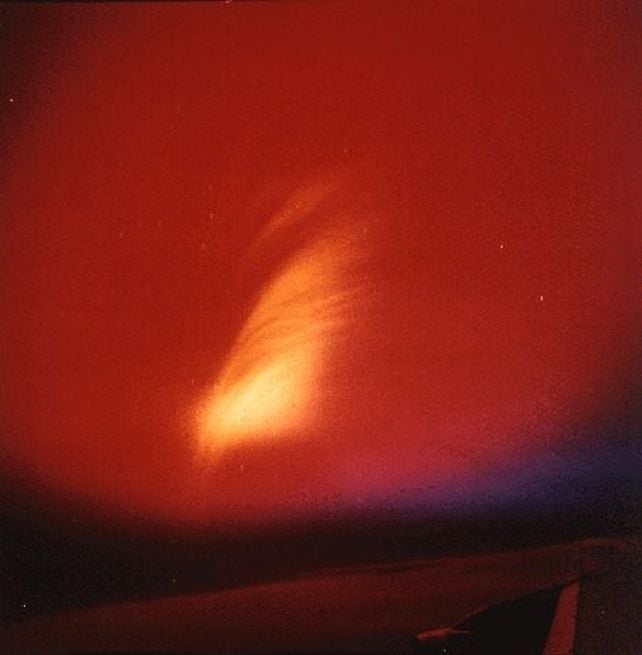
High-altitude nuclear tests revealed just how devastating a nuclear explosion in space could be, damaging satellites and flooding near-Earth space with radiation.
In 1967, global powers signed the Outer Space Treaty, in which all agreed not to station nuclear weapons in outer space.
So far, so reassuring – except for one small problem.
We currently have no practical way to verify that everyone is abiding by it… and without a way to verify compliance, even an international treaty begins to resemble a gentleman’s agreement.
In 2024, a few pieces fell into place for Danagoulian. One of his students was studying a process called neutron spallation, in which high-energy particles knock neutrons out of atomic nuclei.
At the same time, colleagues were talking about the threat of a Russian satellite carrying a nuclear device.
The two concepts came together in Danagoulian’s mind to produce one simple idea.
The Van Allen belts are already bombarding satellites with high-energy protons. Why not use that natural particle beam to search for hidden uranium?
“When the satellite carrying a thermonuclear weapon passes through the inner Van Allen Radiation belts surrounding Earth, protons in that belt knock out many neutrons from uranium nuclei,” he explained.
“By devising a very particular type of neutron detector, one can detect these neutrons – which would be a tell-tale sign of unusual quantities of uranium on a satellite.”
Danagoulian’s work is a feasibility study, which means it doesn’t demonstrate a working system. Instead, it argues that the physics is sound and that the necessary technologies already exist.
“In this project… the secrecy is 100 percent.” – nuclear physicist Areg Danagoulian
Neutron spallation, for example, is routinely used at particle accelerators to produce beams of neutrons that scientists use to study the structure of materials.
Doing that in space, however, adds a whole range of engineering challenges to the mix.
Actually detecting neutrons in orbit is much harder than it sounds. The detector would need to distinguish them from a sea of other particles and determine whether they came from the target satellite rather than Earth below.
It would also have to fly in precisely the right orbit at exactly the right time.
“You have to get all of those right,” Danagoulian said. “It’s a combination of nuclear physics, space weather, and orbital mechanics.”
The engineering was only part of the challenge. Another issue is finding people who will discuss the problem openly.
“I was surprised by how secretive the existing establishment is about this topic,” Danagoulian said.
“My team’s work at MIT belongs in the public domain. Despite this, we have worked on sensitive topics like arms control, warhead verification, and non-proliferation. Colleagues who conduct classified research nevertheless were able to share some information with us.
“In this project, however, the secrecy is 100 percent.”

Despite those engineering hurdles, Danagoulian is optimistic the concept can become reality. His team is already working to refine it, and he hopes other scientists and engineers will help transform the feasibility study into a practical system.
Related: The World’s First Nuclear Explosion Forged an ‘Impossible’ Crystal
Ultimately, Danagoulian hopes spacefaring nations will deploy inspector satellites capable of verifying compliance with the Outer Space Treaty, whether through cooperative inspections or independent monitoring.
“Building a full system will be expensive and quite complex from an engineering perspective. But we think that it can be done,” he said.
“This may sound immodest; however, I think doing this is (nearly) as important as the creation of Starlink, because this verification methodology is necessary for achieving security in outer space.”
The study has been published in Nature.
This article was fact-checked by Rachel Garner and edited by Peter Dockrill. While we pride ourselves on our process, we are only human. If you spot a mistake, please let us know.