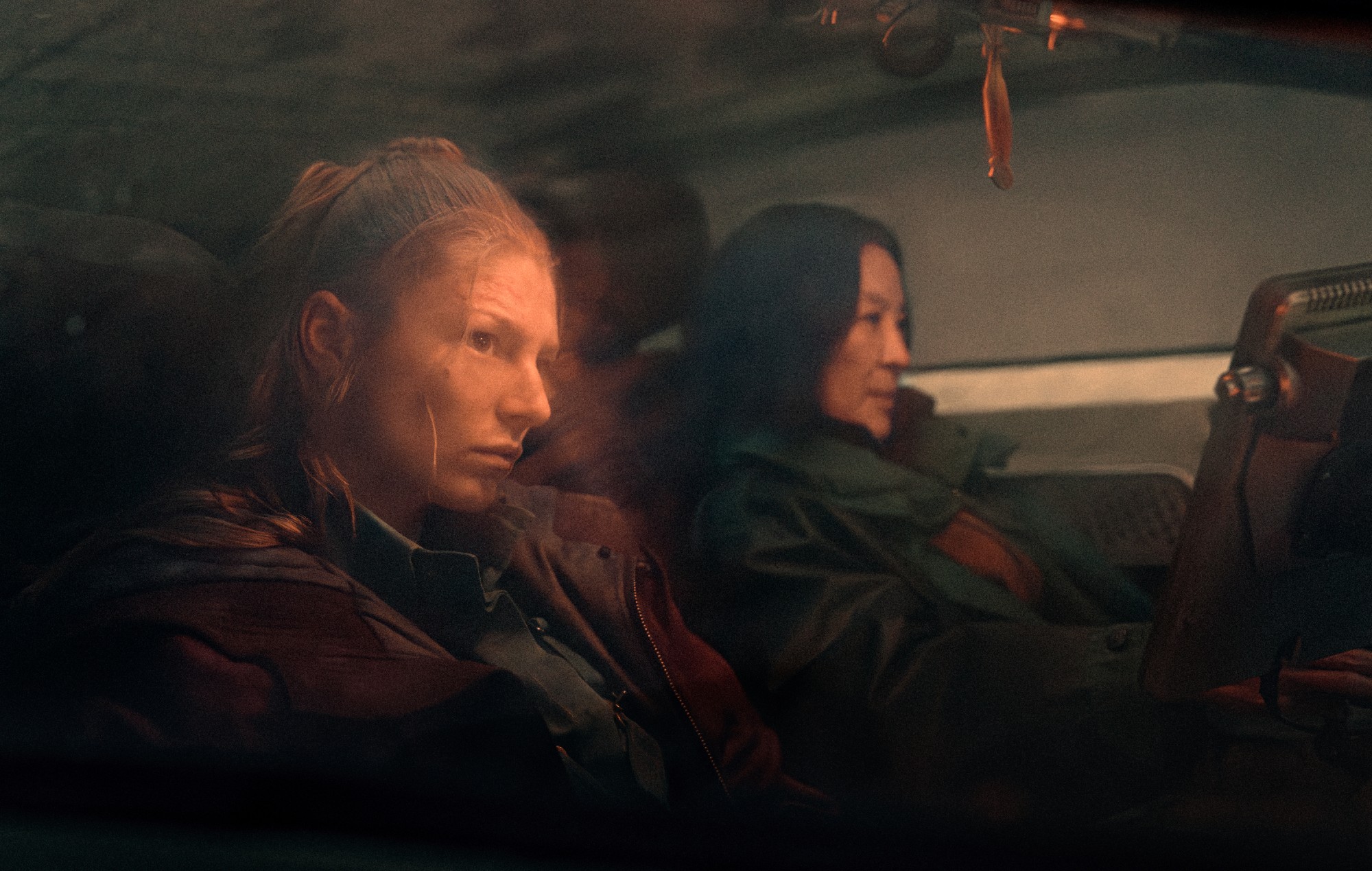
Back in 1982, Blade Runner predicted that we’d all now be living in a dystopian nightmare world without the ability to tell what was real and what was AI…
Ridley Scott’s adaptation of Philip K Dick’s cyberpunk noir novel became an all-time cult classic – shaping sci-fi design enough to get Elon Musk sued for copying it. Denis Villeneuve’s 2017 sequel somehow managed to match it. Sadly, Amazon’s stylish but lifeless new TV series doesn’t add anything worthwhile to the franchise and feels worryingly like a win for the machines instead of the humans.
Showrunner Silka Luisa flips the original premise to better fit our new OpenAI future. The robot “replicants” won the war and we’re the new underclass, with those not surrendering now hunted by cyborg cops. It’s a neat twist, but it’s one that makes the show feel a whole lot less unique as it falls into the trope of a dozen other sci-fi stories.
Hunter Schafer gets her first post-Euphoria lead as Cora, a human on the run who hides her identity by posing as a replicant detective – finding herself partnered up in the LAPD with Michelle Yeoh’s almost aged-out robot Olwen. A larger backstory unfolds across eight hours, with Cora and Olwen getting tangled up in a MacGuffin involving lost memories, corrupt leaders and a quasi-philosophical quest to preserve artificial life, all played out here as a moody cop show with flying cars.
Twice as long as everything we’ve seen of the franchise so far, the series oddly doesn’t make the world seem any bigger. Strikingly designed and thoroughly expensive looking, it’s all a weird digital approximation of everything that’s gone before. There’s busy CG cityscapes and streaks of neon blue light, close-up eyeballs and slow ceiling fans, a synthy jazz score and clouds of smoke everywhere, but it almost looks like a ChatGPT Blade Runner whenever it’s not, very occasionally, venturing somewhere new.
Less textured, less gritty and less interesting than the films, the show looks slick but empty. In fact, everything in Blade Runner 2099 feels this way. It takes about half the series to get over the fact that you’re not watching a very good Blade Runner show and realise that you’re still watching a fairly solid sci-fi crime show instead. Once that’s settled, there’s just about enough to keep things enjoyable: Schafer’s powerfully driven performance (all the better stood next to Yeoh, who seems oddly miscast), a few sturdy chase set-pieces, and a twisty detective plot that mostly all pays off in the last few episodes.
Never earning the weight of its own moodiness, Blade Runner 2099 isn’t deep enough to be so dour, but by taking itself so seriously it at least feels like it respects the legacy, even if it doesn’t quite deserve a place in it. Take away the Blade Runner name, though, and you’ll find a much better show without all the expectations – a downbeat cyberpunk police story with a great lead performance, a lot of nice CGI and some cracking digital production design. Let’s just call it 2099 then. Not everything needs to be a franchise.
‘Blade Runner 2099’ is out November 25 on Amazon Prime Video