Products You May Like
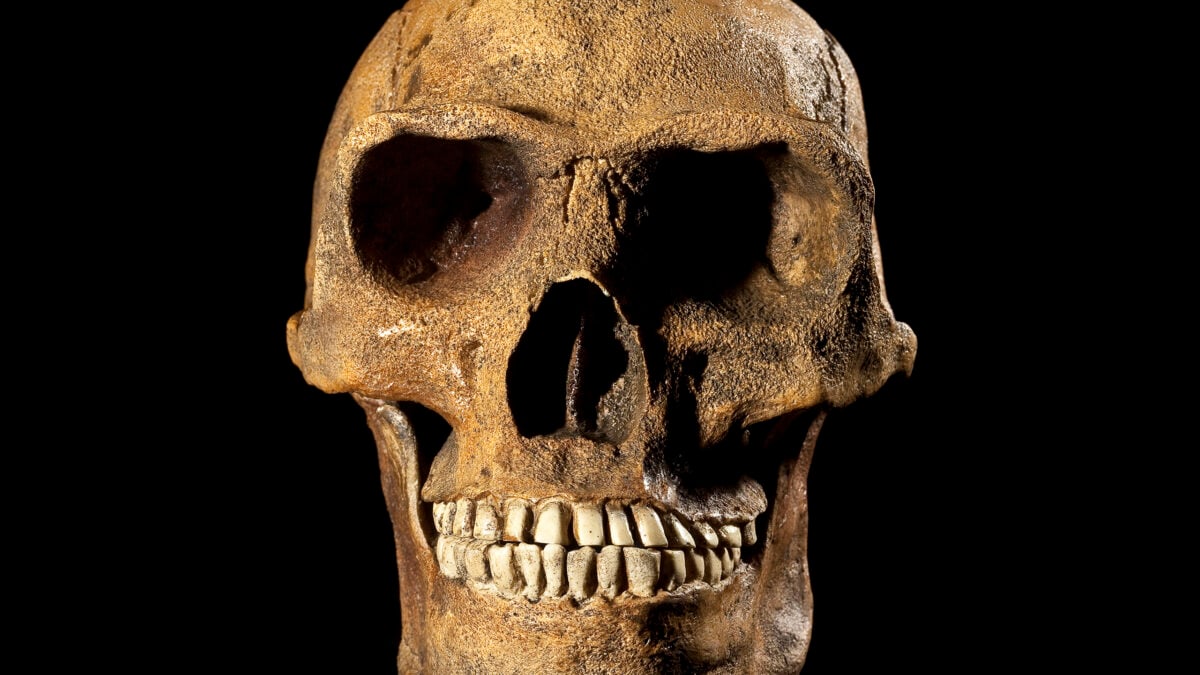
The fossil record shows that our Homo erectus ancestors were the first hominins to show signs of adapting to life on the ground, with longer legs and shorter arms emerging (the name translates to ‘upright human’).
It’s therefore important that anthropologists can date the species correctly – and a new fossil analysis from an international team of researchers, published in the Annals of Human Biology, pushes back the emergence of these proto-people by about 200,000 years.
Imagine archaeologists of the distant future digging up the first iPhone and finding it wasn’t invented in 2007, as previously assumed, but appeared in the time of Neanderthals and woolly mammoths. That’s the sort of timescale we’re talking about.
The discovery comes from the Drimolen Main Quarry near Johannesburg in South Africa, a hugely significant site for early humans known as the ‘Cradle of Humankind’. What’s more, the study includes additional findings for a more distant ancient human relative.
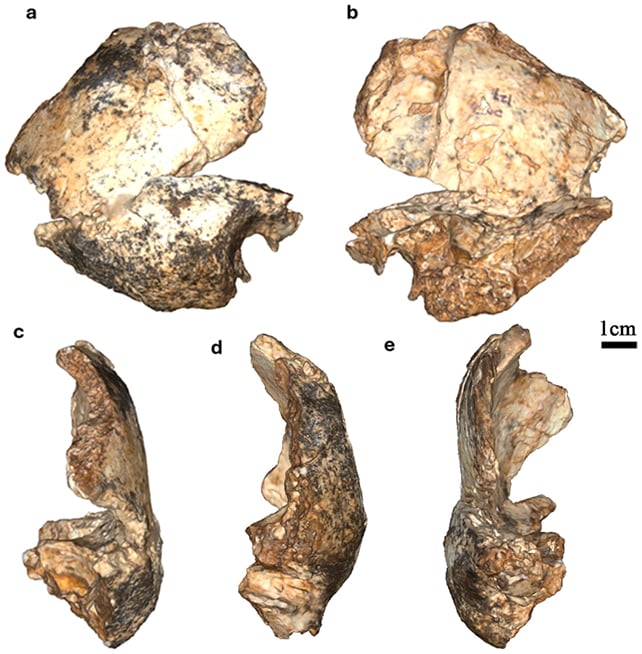
“This paper publishes a new adult fossil attributed to Homo erectus, DNH 127, providing further confirmation that this species first appeared in southern Africa 2 million years ago,” says archaeologist Jesse Martin, from La Trobe University in Australia.
The adjusted timeline isn’t completely new, because a skull fragment designated as DNH 134 had already been dated to the same period.
However, DNH 134 belonged to a young child, making comparisons with adults tricky.
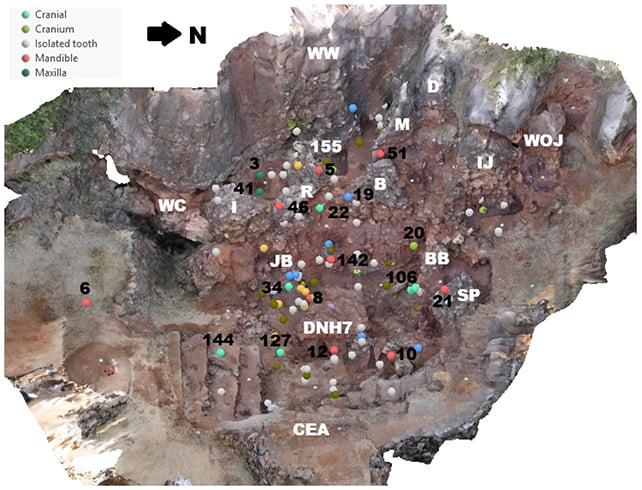
A total of 18 fossils were analyzed in this latest research, with the physical characteristics of the bones used to identify each species, and geological techniques, including radioactive dating, used to determine the age of the fossils.
Besides the single DNH 127 fossil for H. erectus, the team also linked 14 fossils to another hominin, Paranthropus robustus. This ancient relative is farther from us than H. erectus on the family tree, and had heavy jaws and big teeth for processing food that was hard and tough.
At the same time as H. erectus was evolving larger brains and smaller teeth, the teeth of P. robustus were getting bigger, and their chewing muscles were getting stronger (shown by jaw shapes).
Ultimately, it would be the H. erectus lineage that survived.
“These two human species shared the same landscape and are both preserved in the Drimolen cave,” says Martin.
“While we know that Homo erectus and the lineage leading to us was ultimately the successful one, 2 million years ago P. robustus outnumbered Homo erectus at Drimolen by more than 10 to one.”
The P. robustus discoveries back up the idea that the species was evolving over time. Other fossils from the same species found in other locations suggested larger, stronger hominins, a sign of the species changing.
Overall, the new P. robustus fossils revealed some characteristics in jaw structure that hadn’t been seen before, and several areas of variation.
“The large number of fossils from Drimolen, some of which are published in this paper, allow an unprecedented insight into the micro-evolutionary changes that shaped human ancestors,” says Martin.
We already knew ancient human ancestry was complicated, with multiple species overlapping in different places rather than following along one after another. This latest study adds some clarity for two species in the Drimolen region.
It’s worth bearing in mind that the fossils here are relatively small fragments, and further investigation will be required to confirm the presence of H. erectus and P. robustus this far back in time. The good news is there are a lot of discovered fossils to study at this site, and most likely more to be dug up.
There may well be more to find here to help understand why the P. robustus evolutionary line eventually died out, and ultimately, H. erectus likely led to modern-day humans.
“During this time period it was our [H. erectus] ancestors that looked like the outside long-odds chance to survive,” says Martin.
The research has been published in The Annals of Human Biology.
This article was fact-checked by Rachel Garner and edited by Rebecca Dyer. While we pride ourselves on our process, we are only human. If you spot a mistake, please let us know.