Products You May Like
For a long time, horror asked one thing of the Final Girl, survive.
Run through the woods. Find the knife. Crawl through the broken glass. Make it to morning.
Then the credits rolled, and everyone acted like survival was the ending.
Modern horror knows better.
The Original Final Girl

Carol J. Clover gave us the vocabulary in 1992, but horror fans had known the shape of the thing for years before that. The Final Girl was the one who made it. The one who was observant where her friends were careless, cautious where they were reckless, and present when everyone else had gone off to die in pairs.
She survived, and horror rewarded her for a very specific set of reasons. There was a moral coding to her survival that the genre was not always subtle about, and it sat uncomfortably alongside everything else the Final Girl represented.
Laurie Strode in Halloween watched the neighborhood while Michael Myers watched her. Sally Hardesty in The Texas Chain Saw Massacre made it to morning on sheer screaming adrenaline and not much else, which was its own kind of grace under pressure. Nancy Thompson in A Nightmare on Elm Street figured out the rules of a world that should not exist and weaponized her own refusal to sleep. Ginny Field in Friday the 13th Part 2 used her psychology training to talk her way out of death for just long enough.
These are not the same woman. But horror treated them similarly in one important respect. Once they survived, the genre mostly left them alone. The story ended when the morning came. What happened after was someone else’s problem.
Laurie Strode and the Cost of Survival

The thing about Laurie Strode is that she should not still be alive, and she knows it, and that knowledge has done something to her.
The original Halloween gave us a babysitter who survived a night she had no reason to survive and walked away shaking. The franchise spent decades not knowing what to do with her afterward. Some sequels kept her functional. Others broke her completely. By the time David Gordon Green’s 2018 Halloween arrived, Laurie had become something the genre was not initially prepared for, a woman who spent forty years getting ready for the night she already lived through.
Laurie is not inspiring in that film. She is barricaded and separated from her daughter. She has spent so long in combat posture that she cannot be a person at the table or a grandmother at the door without scanning the room for exits. That is not triumph. The film does not sell it as triumph. Laurie survived, and surviving cost her every normal thing afterward, and she is furious about all of it in a way she cannot quite put down even when she wants to.
Survival does not end the story. It starts another one that is often worse.
Sidney Prescott and the Final Girl Who Learned the Rules

Sidney Prescott understood early that she was living inside a horror movie, and she did not find that comforting.
Scream was genuinely clever about what it gave her. The film let Sidney be aware of the genre around her without making that awareness a joke. She knew the tropes. She had watched the movies. And she survived anyway, not because the rules protected her but because she refused to stay inside them when they stopped working. By the time Ghostface called, Sidney had already decided she was not going to be a passive participant in her own terror.
What the Scream franchise did for Sidney over multiple films was let her be traumatized without making trauma her identity. She is sharp and angry and a little funny and clearly dealing with more than she lets on, and the series treats that as complexity rather than damage that needs fixing.
That shift matters. The Final Girl who knows the rules of the thing hunting her is qualitatively different from the one who figures it out by accident. Sidney chose to understand. That choice changed what survival meant for her.
The Final Girl Gets Meaner

Somewhere in the 2010s, the Final Girl stopped waiting.
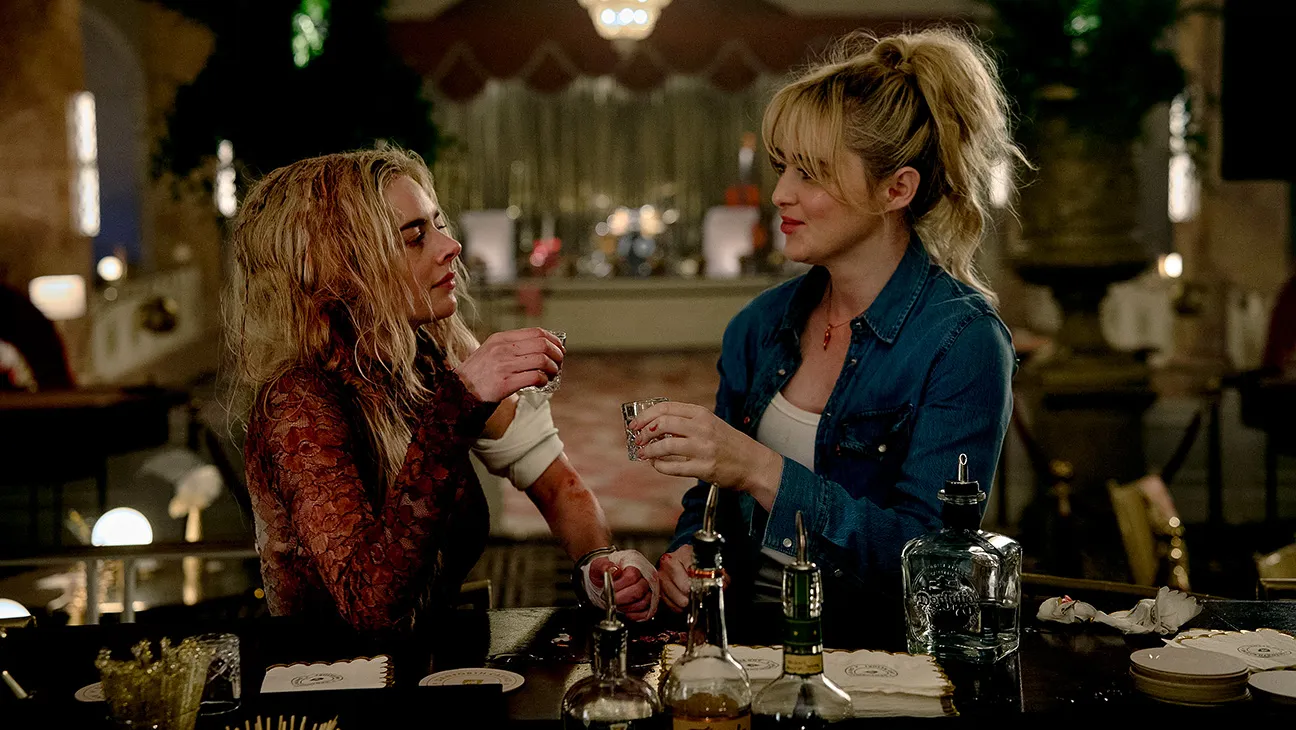
Erin in You’re Next survives a home invasion by being substantially better at violence than the people who came to commit it. Grace in Ready or Not goes from terrified bride to feral and bloodied without losing her sense of what is actually happening around her, which is that her new family is trying to kill her and politeness is no longer on the table. Tree in Happy Death Day has the specific advantage of dying repeatedly, which she uses to get progressively angrier and more competent until she becomes the most dangerous thing in her own slasher loop.
The modern Final Girl does not wait for rescue. She checks the exits, finds a weapon, and makes eye contact while ruining someone’s bloodline.
The through line in all of these is not that the women are suddenly stronger or smarter than the classic Final Girls. It is that the films stay long enough to watch them make active choices in the dark. The survival is not just endurance. It is decision making under conditions that would dismantle most people.
Maxine Minx and the Final Girl as Ambition
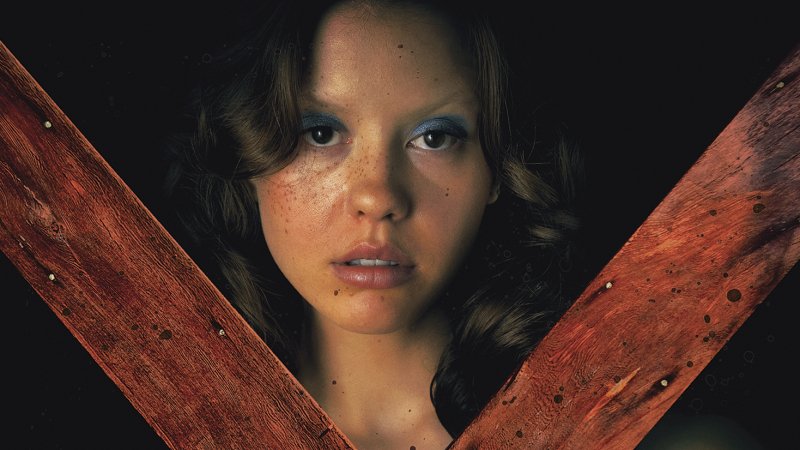
Ti West’s X trilogy gave us something the Final Girl archetype had not quite produced before. A survivor who refuses not just victimhood but smallness.
Maxine Minx says, early in X, that she will not accept a life she does not deserve. She means that. The line is not a pep talk. It is a statement of terms. And through X and Pearl and MaXXXine, the trilogy traces what that refusal costs and what it produces, because Maxine’s hunger for something more than survival is not a clean virtue. It makes her reckless. Sometimes it makes her dangerous. It leads her toward choices that a more conventionally coded Final Girl would never make.
What MaXXXine does with her is grant her the thing almost no Final Girl ever gets, the prize. She survives and she gets the career and she walks into the light with something to show for all of it, and the film lets that moment be genuinely complicated. There is no mistaking it, she earned the accolaydes. She also stepped over things to earn it. Modern horror lets the Final Girl want things beyond survival, even when those wants make her harder to root for cleanly.
Maxine matters because she breaks the idea that surviving trauma should make a woman humble. She went through something terrible and came out wanting more, not less, and that is a kind of defiance the genre has not always known how to honor.
Why Anger Matters
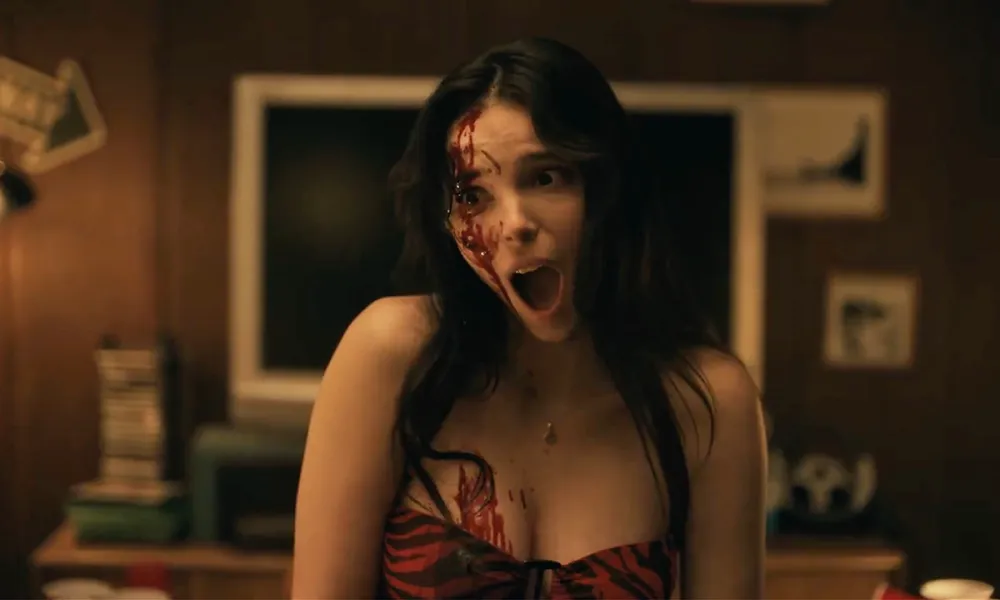
There is a cultural expectation around surviving violence that goes something like this. You should be grateful to be alive, you should find a way to heal, you should become someone who helps others understand what happened to you, and you should arrive eventually at a place of peace that lets everyone around you feel comfortable again.
Horror has always been suspicious of this script, but modern horror has gotten particularly good at refusing it outright.
Anger after trauma is not empowerment. That framing is too clean, and the best horror films in this conversation know it. Laurie Strode’s anger in Halloween 2018 has not made her whole. It has kept her in a fortress of her own construction, which is both understandable and genuinely sad. Sidney Prescott’s anger is controlled and intelligent, but the Scream films never pretend that functioning well on the surface means she is fine. The anger that keeps a Final Girl alive can become the same thing that keeps her from living.
But it is honest. Survival does not equal peace. Crawling out of something terrible does not mean you arrive on the other side clean and ready to be inspirational. Sometimes you arrive furious at the world that let the terrible thing happen, furious at the people who did not notice, furious at yourself for reasons that do not hold up under examination but will not go away regardless.
Horror is one of the few genres willing to let that stand.
The Final Girl Does Not Owe Us Healing

Here is what modern audiences often want from a survivor in fiction, either a complete breakdown that proves the trauma was real, or a complete recovery that proves trauma can be overcome, or a transformation into something formidable that converts the damage into power.
What they frequently do not want is for the survivor to be bitter for years and also funny at dinner. Traumatized and also occasionally petty. Damaged and also mundane. Still angry about something that happened to her a decade ago while simultaneously going about her life in ways that have nothing to do with what she survived.
Modern horror Final Girls can be all of those things at once. They can be difficult. They can be selfish in the small ways that people are selfish when they are carrying too much. Like all of us, they can make wrong choices. They can be exhausted by the role everyone wants them to play and visibly tired of being the person who survived that thing. They can refuse the narrative of their own resilience.
Survival is not character development if nobody lets the survivor be human afterward.
The Final Girl does not owe us healing or strength. She does not owe us a moment of grace where her suffering is redeemed into something the rest of us can feel good about watching. She survived. That is what she owes, and she already paid it.
What Comes After the Final Girl?

The trope is not going anywhere. It has lasted fifty years because it speaks to something real. The experience of being the one who made it through, the weight of that, the question of what you do with yourself once the immediate danger is gone.
But where it goes next is worth thinking about.
Final Girls are increasingly allowed to become villains, or at least to make choices that blur the line. They are increasingly allowed to survive as a group rather than as individuals, which changes the dynamic of who gets to live and why. The genre is slowly expanding who gets to occupy the role. Queer women, trans women, older women, women whose survival is not coded as virtue because virtue was never the point in the first place.
The Final Girl of the next decade might refuse the role entirely. She might decide the horror movie she is living in has bad terms and she is not signing the contract. She might survive and leave the state and never talk about it again, and a film might have the nerve to honor that choice instead of following her back into danger.
Or she might stay angry. Might decide that anger is useful and that she has more use for it than anyone trying to manage it out of her.
Horror has finally started admitting that surviving violence does not make you peaceful. It makes you changed. What happens to the Final Girl after dawn is as complicated as anything that happened in the dark, and the genre has earned the right to stay for it.
The Final Girl is not gone.
She still runs, covered in blood. She still crawls toward morning.
But now, when the sun comes up, horror does not pretend she is fine.
She may be angry, damaged, and even dangerous.
Good.
After everything horror has put her through, she has earned the right to be more than alive.