Products You May Like
Many of the werewolves in medieval literature aren’t what we’d imagine when we use the term now. Quite often, they’re a perfectly ordinary human transformed into a wolf by the nefarious magic of an evil woman—often a jealous or cruel stepmother, or a conniving wife—and will remain that way, sometimes for years, until somebody discovers the key to their transformation and reverses it. Bisclavret, the titular werewolf protagonist of a 12th-century lai (a short tale in rhyming verse) by Marie de France, is an interesting case. While his story does broadly follow this pattern, he is already a werewolf before the poem begins, transforming into a wolf as often as three days a week. The nature of this transformation is never explained: We never learn whether he was born that way or under some kind of curse nor how voluntary the transformations were.
“He can’t escape the wolf by being careful, but what life can he live alongside it?”
In The Wolf and His King, I chose to interpret Bisclavret’s condition as, essentially, a chronic illness: a lifelong condition that flares up at intervals and prevents him from fully participating in the world, his own body pushing him to the margins. Chronic illness and pain can feel like a wolf living in your skin, and the fear of losing more of yourself keeps you isolated, forcing you to spend all your time being careful and avoiding triggers and overexertion. If, occasionally, you decide that you want something enough to face the consequences—if you decide that the flare-up is worth it—then when the pain does come you are faced at every turn by people asking, “Why would you take this risk? You know you should be careful.”
And yet one of the devastating things you learn from being disabled or chronically ill is that you can spend your entire life being careful, but it won’t protect you. You can do everything right, and still have a flare-up; you can be the fittest person in the world, and still get sick; you can take every precaution, and still lose hobbies, jobs, parts of your identity to your health. And once you’ve learned that the hard way, the fear of further loss lingers: What else will be taken from you?
Bisclavret, when we meet him at the start of this book, has been careful for a very long time. But once he has a taste of the world he’s missing, the thought of returning to a life of loneliness and fear is unbearable. He can’t escape the wolf by being careful, but what life can he live alongside it? What will he lose by trying? It seems impossible to him that he could be a knight, that he could belong to the world or that he could be loved, and admitting that he wants to seems like taunting the wolf.
But the wolf will come anyway. That doesn’t mean there is no space for joy, for love, for life, for everything that makes the pain worthwhile. And there will be those who greet the wolf unafraid, and that joy is worth seeking.
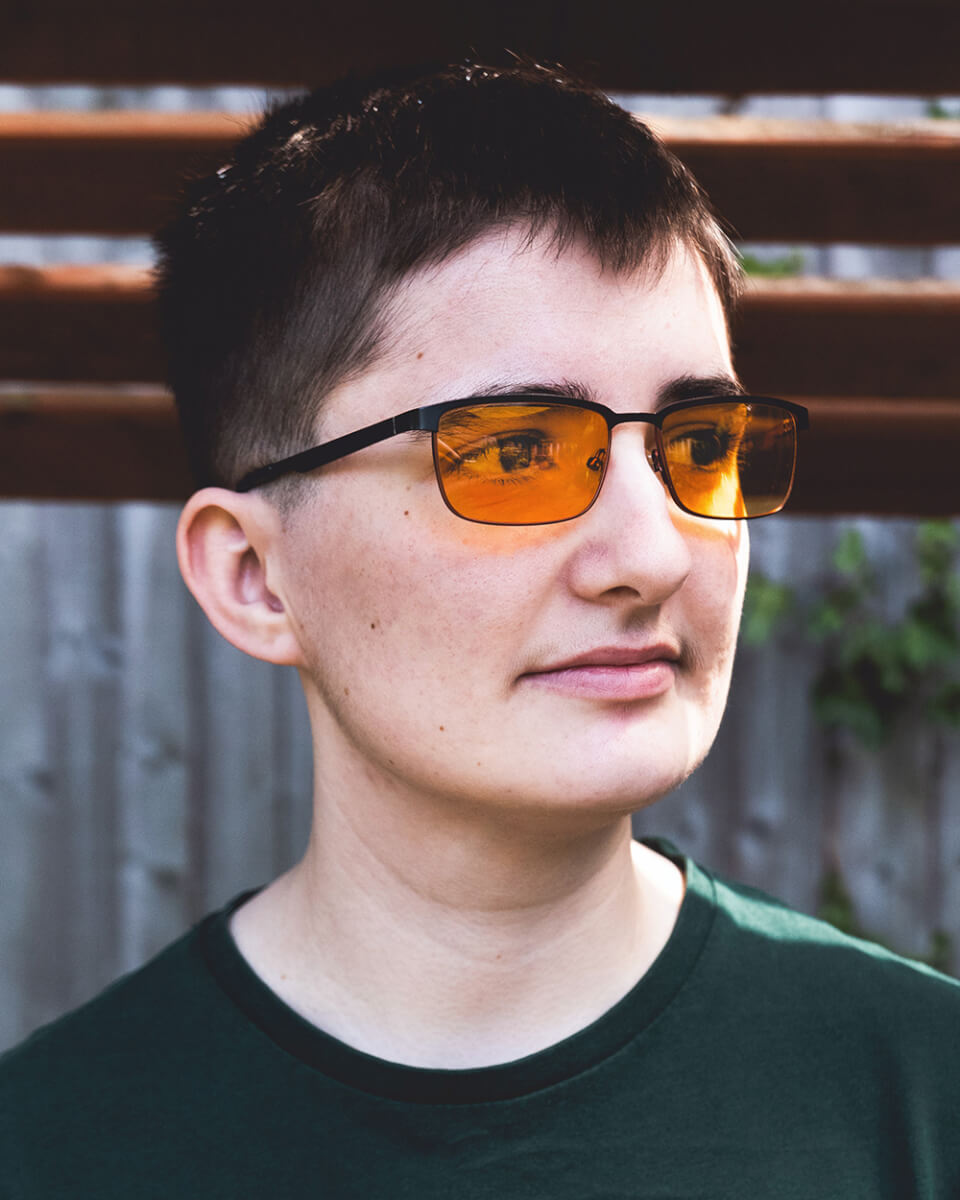
Author photo by Ben Longman